
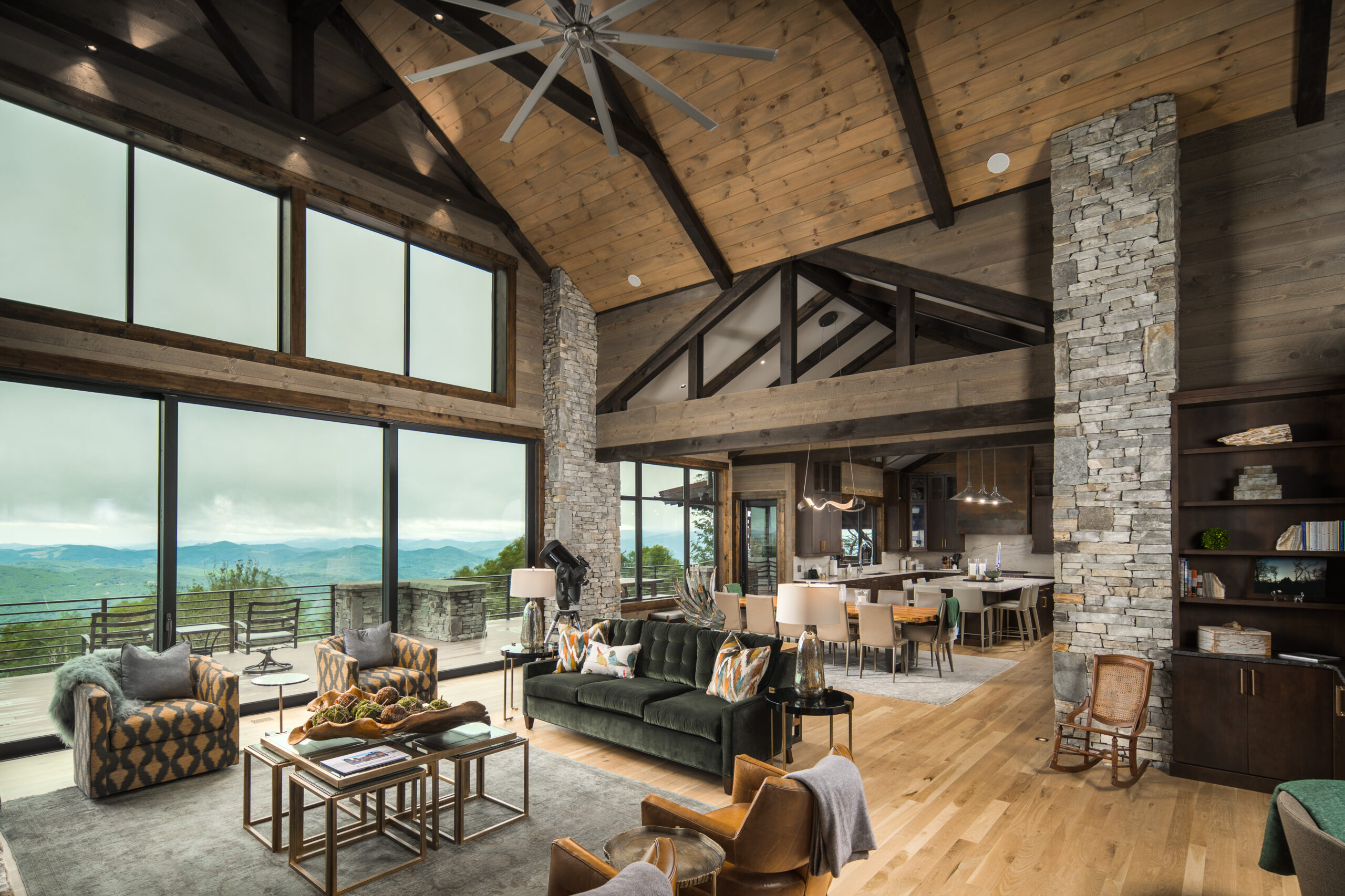
Wood interior design in a mountain home starts with materials that reflect what exists just outside—forests, rock formations, and natural terrain. Wood and stone are central to authentic mountain interiors because they echo the surrounding landscape, but selecting them is a complex task. Every element has to hold up to temperature swings, mud, snow, and increased UV exposure.
The goal is to create interiors that feel connected to the surrounding mountain landscape with materials that will wear and age beautifully.
Find the right materials for your North Carolina High Country home. Book a Design Studio consultation to get started.
How Do You Choose the Right Wood for a Mountain Home?
Wood selection is one of the early design decisions that locks in the feel of a mountain home. Approach wood as a baseline material—not a finishing detail. That establishes consistency across the home and means narrowing down your options early and testing them alongside your stone selections.
Where Wood Works Best
Wood is commonly used across flooring, ceilings, beams, and millwork. Each application comes with different performance considerations. Flooring must handle traffic and potential moisture from snow or mud, while ceiling applications contribute heavily to the overall tone of the space without the same wear exposure.
Movement should be expected. Wood expands and contracts with humidity changes, which are common in mountain environments. Proper installation methods will help reduce gaps and warping over time.
Species Selection
Start with durability. The Janka hardness scale is a useful benchmark for comparing species. White oak (around 1,360 lbf) offers a balance of durability and workability, while hickory (around 1,820 lbf) provides higher resistance to dents in high-traffic areas. Walnut, though softer, is often used selectively for visual contrast rather than heavy wear zones.
Reclaimed timbers are common in mountain homes for structural beams and ceiling applications. They bring natural variation and stability due to their age and prior exposure, though they require careful sourcing to ensure structural integrity.
Grain & Cut
Cut style influences both appearance and performance. Rift- and quarter-sawn boards provide tighter, more consistent grain patterns and perform better in spaces with fluctuating humidity. Plain-sawn boards show more variation, which can add character, but each board should be placed carefully to avoid a patchwork effect.
Natural wood will always include color shifts and grain differences—grouping similar tones and patterns across a space keeps it feeling cohesive.
Finishes
Natural or matte finishes highlight the raw character of the wood and tend to show wear more evenly over time. Stained finishes offer more control over color consistency but can mask grain detail if applied too heavily.
Wire-brushed and textured finishes are often used in mountain homes because they reduce the visibility of scratches and daily wear—removing softer grain and leaving a more durable surface behind.
What Should You Know About Selecting Natural Stone?
Stone carries a lot of visual weight in an interior. The specific type, cut, and color can make a space feel more traditional or more contemporary, even without changing any other element.
Fireplaces remain the primary focal point for stone in mountain homes. A well-chosen stone fireplace anchors the main living area and sets the tone for the rest of the space. Stone also works well in entry transitions and bathrooms, where durability and texture matter.
Reviewing full samples, understanding how the stone will be installed, and coordinating it with the primary wood selection helps ensure it enhances the space rather than dominating it.
Types of Stone Used in Mountain Homes
Granite and quartzite are frequently selected for their durability and resistance to scratching. Quartzite offers high hardness with a more varied appearance. Limestone and slate provide softer, more muted tones but require more maintenance due to higher porosity. Fieldstone is often used for fireplaces and exterior transitions—its irregular shape and natural appearance reinforce the connection between the home and the surrounding terrain.
Performance
Porosity and hardness determine how stone performs. Dense stones like granite resist staining and moisture absorption, making them suitable for kitchens and high-use areas. More porous stones require sealing to prevent water infiltration and staining.
Stone is also affected by the mountain’s freeze-thaw cycle. Stone used in exteriors or near entryways should withstand significant temperature changes without cracking. On floors, textured or honed finishes provide better traction than polished surfaces—especially when moisture is present.
Texture & Cut
Dry stack and ledgestone installations create a more linear, contemporary look, while full-bed stone provides a heavier, traditional appearance. Veneer applications reduce weight and cost while maintaining a similar look, though full-depth stone is still preferred for certain structural or high-impact features. Extending stone from exterior to interior spaces can create continuity, particularly around entryways or fireplaces.
What Other Natural Materials Go Well With Wood and Stone?
You don’t have to stick to wood and stone exclusively. Introducing other elements can help refine the feel of the space—choose materials that complement your primary selections, adding contrast and softness where needed.
- Metal: Blackened steel and iron work well in railings, hardware, and lighting. Aged brass adds warmth when used selectively, particularly in kitchens or bathrooms.
- Textiles: Wool, leather, and linen soften the harder surfaces of wood and stone. These materials perform well in cooler climates, offering durability and comfort without feeling out of place.
- Glass: Glass balances heavier materials by opening views and allowing natural light to move through the space. Large windows are typical in mountain homes—material selections should account for how light interacts with surfaces throughout the day.
What Mistakes Should I Avoid When Choosing Natural Materials?
A few common mistakes can undermine even well-chosen materials.
- Don’t overmix materials: Introducing too many wood species or stone types can make the space feel fragmented and busy.
- Don’t overlook maintenance needs: Some stones require regular sealing, and certain woods show wear more quickly in high-traffic areas.
- Don’t follow short-term trends: Regional context matters more than the latest fad. Materials that align with the environment and architecture will serve the space better long-term—though there is always room to add your own personality and style.
Bring Your Mountain Home Interior to Life in the VPC Design Studio
Choosing materials for your mountain home is easier to manage in the
Design Studio. You can review options side by side under different lighting conditions and see how each element works together through the day and over the seasons—building a coordinated palette that aligns with your aesthetic goals rather than making disconnected decisions.
Create a cohesive mountain interior that’s built to last. Book a Design Studio consultation to start comparing materials in person and building a plan for your home.