
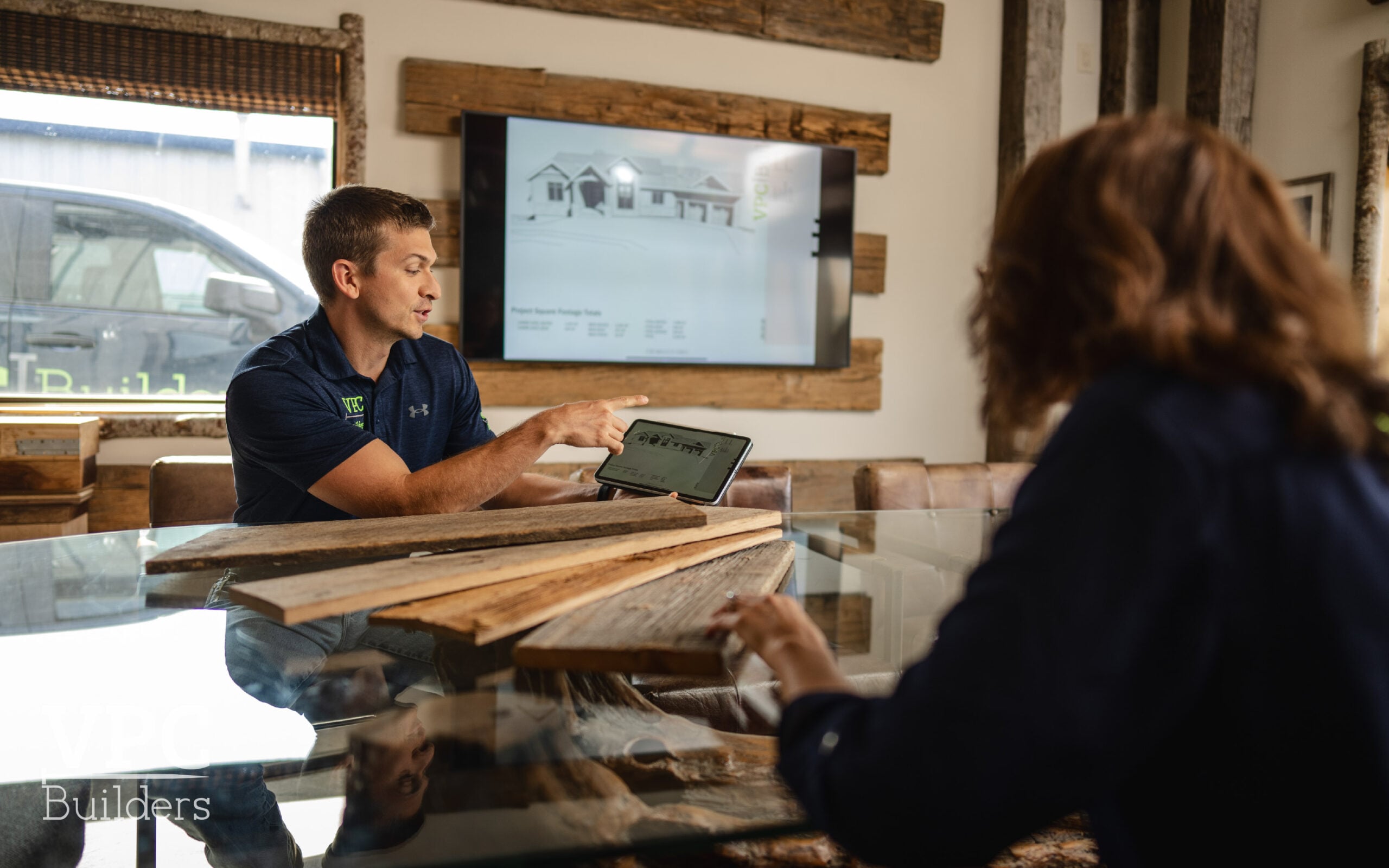
You’ve spent a lot of time, maybe even years, planning your dream home in the NC High Country. Turning those plans into a buildable design means choosing a builder you can trust through every step of the process.
But how do you find the right builder?
Asking a builder questions that dig deeper than pricing and timelines can help you understand how they communicate, handle change, keep you informed, and navigate the unexpected challenges that come with all building products.
These details matter even more in the first stages of your project. So before you sign anything, here are the questions you should ask a custom home builder and why they matter.
Ready to take the next step to building a custom home in the North Carolina High Country? Contact VPC Builders and request a High Country Home Planning Call.
What Are the Most Important Questions to Ask a Custom Home Builder Before Hiring?
A builder’s custom home portfolio shows you their finished work. The questions you need to ask are about the process behind the photos.
Start with questions like:
- How much experience do you have with projects similar to mine?
- Have you built on mountain lots in Boone, Banner Elk, Blowing Rock, or nearby communities?
- Who will manage my project and serve as my primary contact?
- How do you develop the initial budget?
- Which costs are fixed, estimated, or handled as allowances?
- How are changes and unexpected site conditions addressed?
- How often will I receive budget and schedule updates?
- What warranty and follow-up support do you provide?
Licensing should be easy to verify. In North Carolina, a general contractor must hold a license for projects valued at $40,000 or more. Homeowners can confirm the builder’s status through the North Carolina Licensing Board for General Contractors.
How Do You Evaluate a Home Builder’s Communication and Transparency Before Signing?
The early conversations you have with a builder will tell you a lot about them. Pay particular attention to how they answer your questions in these early phases. Are they responding with specific answers or providing general assurances? The more specific they can be with answers, the better.
Good communication doesn’t mean the information they provide has to stay fixed, though. Custom construction involves evolving details. But there should be a clear, documented process for the changes, including reviewing your options and helping you make an informed decision.
Ask them who you will communicate with during design and construction and how that communication will happen. Are you getting weekly email updates or daily texts? How often are costs reported?
It should be clear who will communicate with you, how they will do so, and what information you can expect at every stage of the project.
What Should a Home Builder Contract Include in North Carolina?
A construction contract is not only a legal document, but also the project’s written roadmap. Everyone named in the contract needs to understand what’s included and what happens if anything changes.
A good building contract should include:
- A detailed scope of work
- All plans, specifications, and referenced exhibits
- Materials, fixtures, finishes, and equipment
- Allowances and exclusions
- The contract price or pricing structure
- A payment schedule connected to progress
- Estimated timing and completion terms
- Written change-order procedures
- Responsibility for permits and inspections
- Warranty and punch-list procedures
- Terms covering delays, disputes, suspension, or termination
Make sure you thoroughly read every document before you sign. You can also have a North Carolina attorney review it first. The North Carolina Licensing Board has additional contract guidance that can be a useful starting point for homeowners.
What Are the Warning Signs of a Problem in a Home Builder Contract?
A long contract isn’t always a good contract. The biggest red flags are when information isn’t clear. Look at a contract more closely when
- The scope relies on phrases such as “builder standard” without defining what that means.
- Allowances lack realistic amounts or a clear explanation.
- Verbal promises are missing from the written agreement.
- The change-order process is unclear.
- Major materials can be substituted without discussion.
- The payment schedule is heavily front-loaded.
- Warranty responsibilities are vague.
- Plans, specifications, or exhibits are incomplete.
- You are pressured to sign before questions are answered.
An honest builder should welcome questions. If they act annoyed or too busy to answer, consider yourself warned.
What Is a Pre-Construction Meeting and What Should You Expect From It?
A pre-construction meeting marks the transition from the planning stage to the active construction phase. It usually takes place after the contract is signed and the major design and pricing decisions are complete, but before site work begins.
During the meeting, your builder might introduce the project team and confirm who is handling the day-to-day communication. You might review the current plans, take care of any outstanding selections, and go over the construction schedule.
For a High Country home, the meeting might also go over weather forecasts (a major consideration when building a mountain home!) and other practical issues that will affect site activity.
You should leave this meeting knowing what happens first, what decisions you still need to make, and how the builder will be keeping you updated.
Confidence Should Come Before Construction Begins
The questions you ask a home builder before signing a contract should bring clarity to two things:
- What your finished home will look like
- What the experience of building it will be like
VPC Builders wants to make the custom home building process a positive one from the first conversation. We bring our local knowledge and decades of experience to the table, and we’re happy to answer as many questions as you have to ask. We know you’ve been planning this dream home for years, and we want to make each step of the journey one you’ll remember happily.
If you are considering building a home in Boone, Banner Elk, Blowing Rock, or the surrounding area, start a conversation with VPC Builders by scheduling a High Country Home Planning Call with us today.