
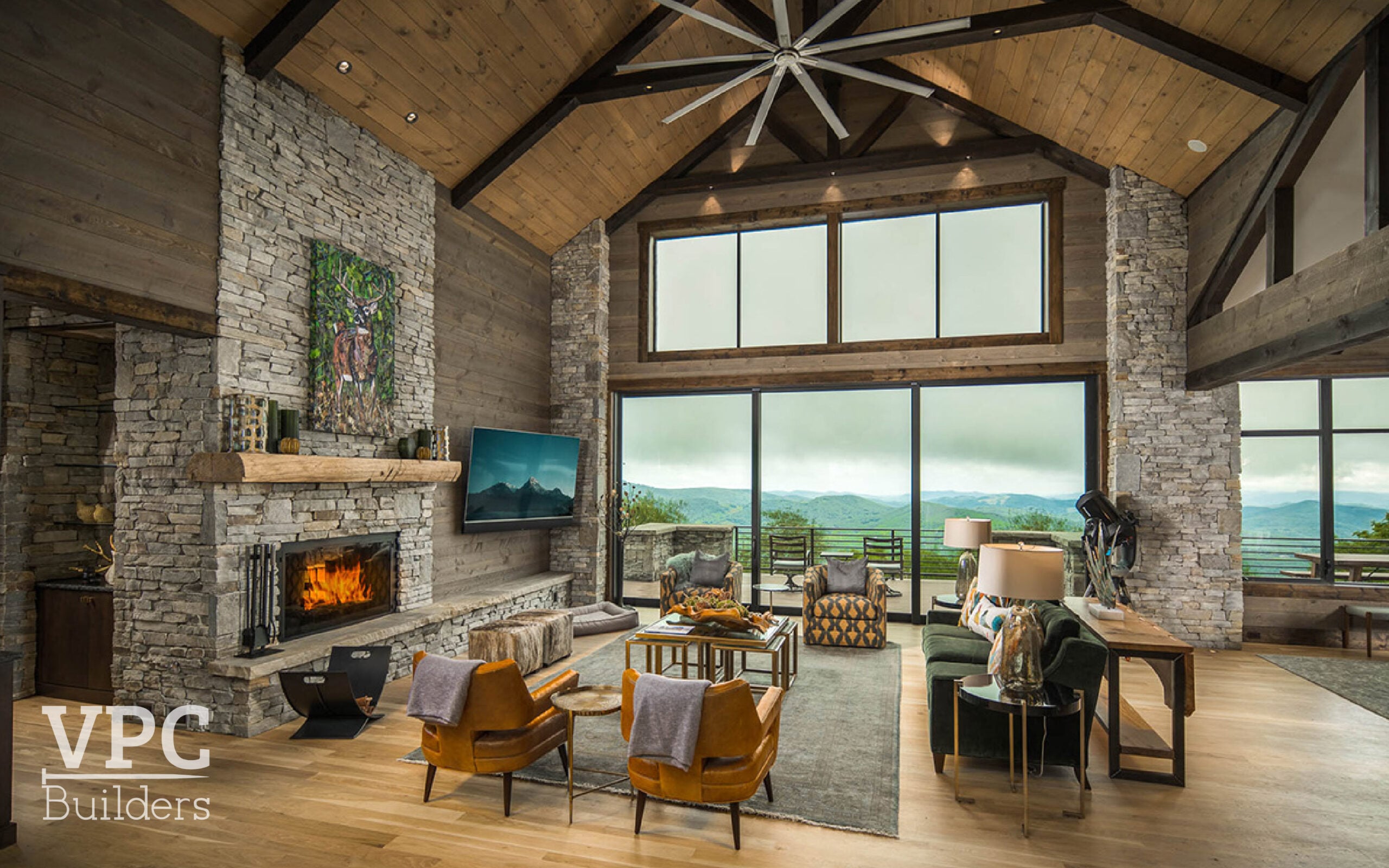
The idea of designing a home in the mountains you love that’s built around how you live is an exciting one.
But what’s the cost to build a custom home?
It’s a complex question to answer. The cost to build a custom home in this region is shaped by more than square footage and finishes. Every part of the construction process can influence the final number. But working with an experienced custom home builder can help you set a realistic budget before breaking ground.
Want to explore the cost of a custom home in the NC High Country? Contact VPC Builders to schedule a High Country Home Planning call today.
How Much Does It Cost to Build a Custom Home in the NC High Country?
There is no simple formula that will work for every custom home in the mountain communities. However, the National Association of Home Builders (NAHB) reports that the median price per square foot for a custom home was $166 in 2024. Costs have increased since then, so you can expect those averages to be slightly higher today.
A standard cost-per-square-foot estimate can be a starting point, but it won’t capture the full scope of the project. Two homes with the same finished square footage can have very different budgets. One might sit on a lot that needed very little excavation while the other needed extensive retaining walls and had a complex foundation. These estimates from the NAHB exclude the land and may not capture site improvements or the additional work required on a steep mountain property.
The NAHB surveyed 4,000 home builders and found the average share of the construction cost broke down like this:
- Site work: 7.6%
- Foundations: 10.5%
- Framing: 16.6%
- Exterior finished: 13.4%
- Major systems rough-in: 19.2%
- Interior finishes: 24.1%
- Final steps (landscape, driveway, cleanup): 6.5%
- Other: 2.1%
The most useful number is the one you get from your builder that calculates the total project cost. That number is set earlier in the process than you might expect.
What Factors Make Building a Custom Home on a Mountain Lot More Expensive Than Standard Construction?
Mountain construction introduces a lot of conditions that aren’t as common on flat building sites or within suburban neighborhoods. Those conditions can have a big impact on your budget.
Access
Narrow roads, steep grades, and tight turns can affect how both the construction team and their materials reach the site. In some cases, it may be necessary to break large loads up into smaller ones or to put in a temporary road for deliveries.
Slope
A home designed for a steep site may need deeper foundations, reinforced walls, or a stepped layout that follows the terrain. These features can make the home feel more integrated with the surrounding landscape, but they can also affect labour and material costs.
Other factors that can increase the cost to build a mountain home include:
- Rock encountered during excavation
- Drainage and erosion-control work
- Long utility runs
- Difficult septic placement
- Seasonal weather delays
- Limited space for storing materials
- Additional structural engineering
The mountain terrain can be appealing, but you’ll want to take the cost of reaching and supporting the homesite into account when building your budget.
In our experience, though, the views are worth it.
How Does Site Work and Grading Affect the Total Cost of a Custom Mountain Home Build?
Site work is one of the biggest cost variables in a mountain home budget because it’s so specific to the lot you choose.
Before we can begin on the foundation, we have to clear, shape, and stabilize the lot. Driveways might need retaining walls or additional drainage for uphill runoff. Utilities might have to travel long distances from the mainlines on the road to the building site.
It can be difficult to estimate these costs from a quick walk around the property, as a wooded lot can conceal challenges that only reveal themselves when the initial site work is complete.
How Do I Set a Realistic Budget for a Custom Home Build in Banner Elk or Boone?
You can’t set a realistic custom home budget in the NC High Country until you have the full scope of the project.
Start by identifying everything your budget has to cover, then set your priorities. Some homeowners place the greatest value on a large kitchen and gathering space. Others care more about the outdoor living spaces or sustainable building practices.
Finally, review your allowances. Cabinetry, flooring, tile, plumbing fixtures, and appliances vary significantly in price. Allowances should reflect the level of finishing you want rather than an entry-level figure that isn’t going to align with your selections. If you want premium tile, for example, build it into your budget from the start.
Your team can help you test the design against your budget as it develops. They can alert you if things are starting to run over and help you find ways to save (maybe that tile isn’t so important, after all!).
What Contingency Percentage Should I Build Into a Custom Home Budget in NC?
A contingency provides room for unexpected conditions or costs that come up during the construction of a custom home. A lot of builders use a “rule of thumb” of 10%, but that’s not always a good rule to follow.
How much you should set aside depends on how much you already know when construction begins. A project with completed surveys, soil information, finalized plans, and detailed selections has a lot less uncertainty than one still relying on a quick site walk-through.
Effective custom home build contingency planning in NC should account for
- Unforeseen site conditions.
- Design details that still need to be resolved.
- Material price changes.
- Owner-requested changes.
- Utility or permitting requirements.
- Long-lead products and substitutions.
Where Can You Adjust the Budget Without Compromising the Entire Home?
The goal is never to compromise on the character of the home. Instead, it’s about directing funds to the areas that will have the biggest impact on daily life and your long-term satisfaction.
- Simplify the footprint. This reduces the complexity of the foundation and roofing but doesn’t have to make the home feel basic, either.
- Focus on areas where high-end finishes matter most. If you love to cook, upgrade the kitchen appliances. If you love to be outdoors, focus on the outdoor living spaces. Spend money where you spend the most time.
- Phase the landscaping. You don’t have to get every plant in before you move in. You can put a lawn in later in the year or wait to finish an outdoor living space.
A Better Budget Starts Before Construction
Knowing what budget you are comfortable with can help shape custom home planning and guide important design decisions.
VPC Builders helps clients in Boone, Banner Elk, Blowing Rock, and the surrounding region create custom home budgets before construction begins. Through early site review, coordinated planning, and clear communication, we help you develop a practical budget that takes you from initial plans to a completed mountain home.
Start building your budget. Schedule a High Country Home Planning Call with VPC Builders today.