
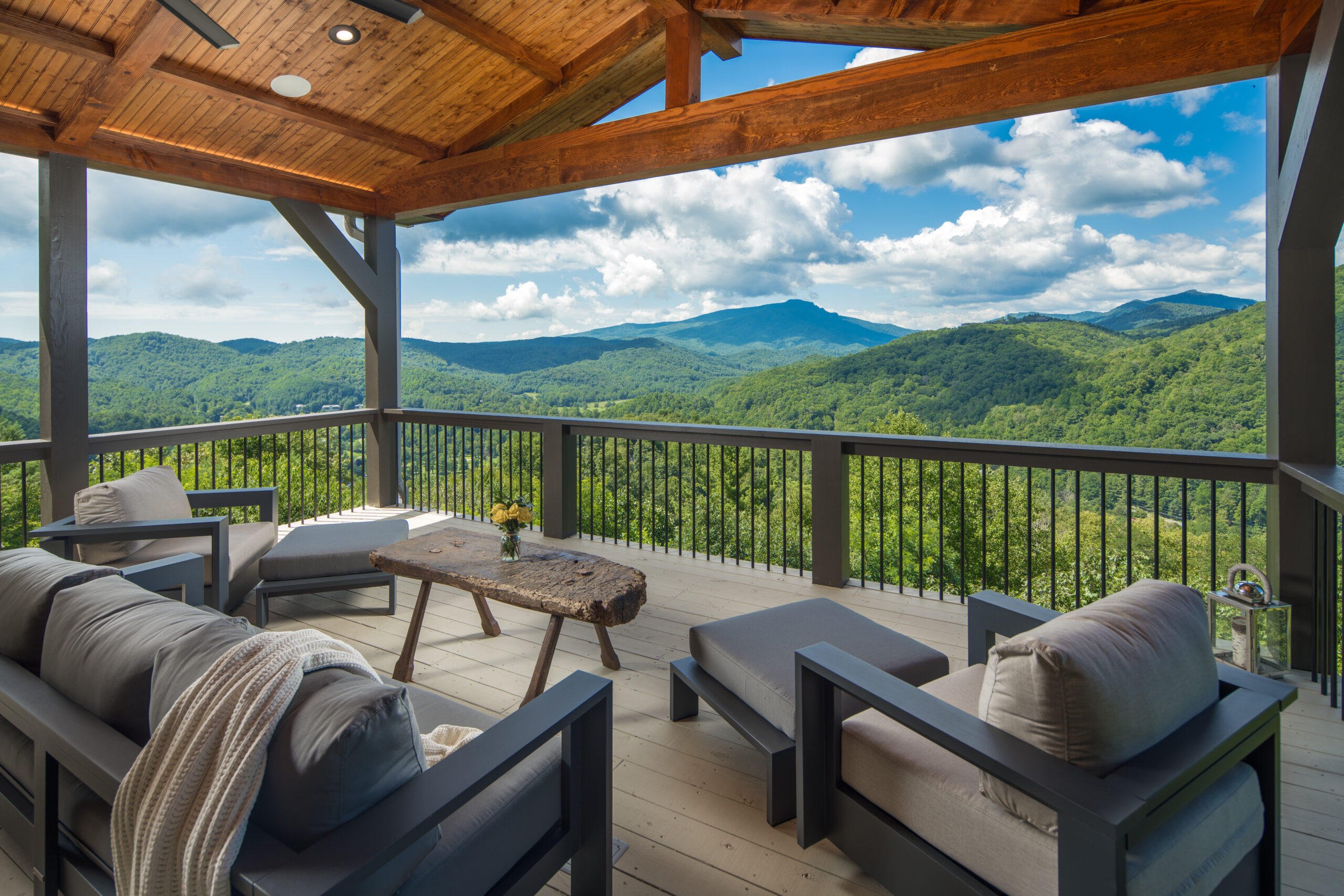
Outdoor living spaces often become the most used part of a mountain home, especially those months from early spring into fall. A well-designed outdoor space is where mornings start with a cup of coffee and summer evenings can stretch out a little longer. In the North Carolina High Country, these are spaces where the view never gets old.
The question isn’t whether or not your High Country home needs a great outdoor space. It does. The question is how to design these spaces so they’re natural extensions of your home.
Dreaming of an outdoor space that works with your property’s layout and how your family lives? Book a Design Studio consultation with VPC Builders to start planning a new outdoor living space for your High Country home.
What’s the Best Way to Start Designing an Outdoor Space?
Landscape should lead the design of outdoor spaces in the high country. Long-range views and wooded surroundings will influence how outdoor spaces are built, but making the most of the unique landscape around your home takes more than the deck facing the right direction.
Start by identifying the strongest vantage points on the property. Walk your site at different points in the day to understand how the light changes. Think about how the view will change with the seasons, too, especially as foliage changes. Identify one or two sightlines to anchor the design.
From there, the layout can start to take shape. The best outdoor spaces will
- Frame the view, not just face it. Instead of orienting a space broadly toward the horizon, design elements like a roofline, column, or railing can frame a specific sightline.
- Control what’s seen (and what isn’t). Sometimes it’s less about capturing the best view and more about filtering out the bad ones. That might include neighboring structures or roadways. Strategically placing walls or landscaping can make your outdoor space feel more private.
- Work with elevation changes. Sloped sites offer an opportunity to create a unique outdoor space, which can be multi-level decks or stepped patios with distinct zones. Don’t try to force a flat plane into a sloped landscape.
Building the Right Outdoor Living Space for Your Property
Should you build a porch, a deck, or a terrace? The answer starts with your current structure and how you want to use the space day-to-day.
Porches feel more connected to the home and can be covered for protection from the elements, extending their use across a wider range of conditions (a plus for the High Country, where the weather is unpredictable). In many homes, a good porch becomes a primary gathering space.
Decks are a good way to take advantage of your elevation. On sloped lots, a deck can extend the living space outward and position it for the best views. Decks are often more exposed than porches, though, but in the High Country, that can be part of their appeal.
Terraces and patios sit closer to the ground and often tie into the surrounding landscape. They work well as places to step away from the main living space or to create a private setting elsewhere on the property.
Bringing Your Outdoor Space to Life
The best outdoor spaces are functional. Think about how you want to use the space, not just how you want it to look.
Start with cooking equipment—a built-in grill, smoker, or full outdoor kitchen—then build out from there:
- Comfort features like fireplaces and ceiling fans to extend the seasons you can use the space.
- Entertainment like outdoor TVs and sound systems, which work best when planned in from the start rather than added later.
- Scale and purpose tailored to how you’ll actually use it, whether that’s hosting a crowd or creating a private retreat for two.
The key is designing the space around how you want to live in it.
Making Indoor and Outdoor Spaces Work Together
How an outdoor space connects to the home matters just as much as the space itself.
Placing access points near kitchens or main living areas makes movement between spaces feel easy and intuitive. Large sliding or bifold doors can open up an entire wall, while more traditional options create a defined transition.
An outdoor space you can see from inside the home tends to get used more. When it’s visible and accessible, it becomes part of the daily flow rather than a separate destination.
Carrying material choices from indoors out can help everything feel cohesive. Similar tones or finishes can run from indoor flooring to exterior surfaces, and lighting details and structural elements can be echoed outdoors.
Why Some Outdoor Spaces Sit Empty
Most outdoor areas that look finished but go unused likely had a design issue.
- The space is too crowded to feel comfortable. A deck might technically fit a table and chairs, but still feel cramped when used.
- The furniture layout wasn’t planned early. When these decisions come after construction, the space can feel awkward.
- Transition from indoor to outdoor feels difficult. If access isn’t convenient or intuitive, people tend not to use the space.
- There’s too much exposure. Direct sun, lack of shade, or no rain protection can make the space uncomfortable to use for large parts of the day.
Designing with these factors in mind from the start leads to spaces that feel natural to use, not just nice to look at.
Working with a design-build team helps align these decisions from the start, so the finished space feels integrated rather than added on.
A Better Way to Think About Outdoor Living
Outdoor spaces, like a deck or porch, should fit the property and feel like a natural extension of your home and hold up to the conditions that come with mountain living. They should naturally invite people to use them.
Ultimately, the best outdoor spaces are the ones you want to be in.
If you are planning an outdoor living space in the High Country, VPC Builders can help you design a space that works for your property. Reach out to request a Design Studio consultation with our team.