
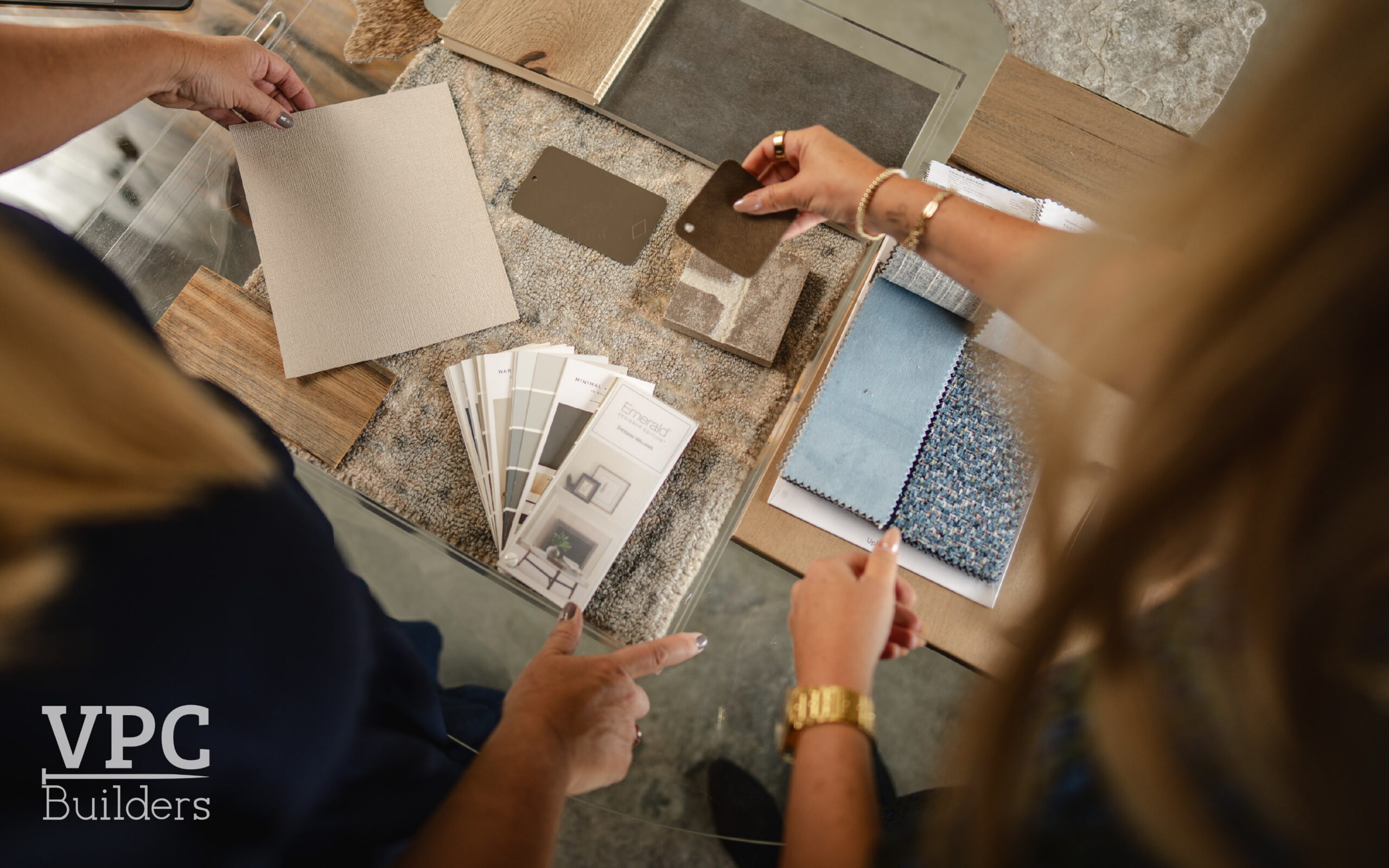
Interior design shouldn’t be the finishing step. It should be baked into the entire building process, because it works best when it starts in the earliest stages. Early interior design planning takes any uncertainty out of the situation and helps homeowners make better choices for shaping the feel and function of their new space.
When managed correctly, the interior design process should feel manageable rather than rushed. It feels exciting instead of stressful.
Here’s how the VPC interior design team manages the process to make it easier (and more fun!) for homeowners.
Want to take the stress out of planning your interiors?
Book your stress-free design consult→
From Ideas to Direction
Many homeowners start with inspiration rather than a clear plan. They may know what they like, but not how to turn that into a cohesive interior design. Interior design planning translates those ideas into a usable direction.
It’s a process that goes way beyond finishes and paint colors. It considers how rooms connect to each other, how spaces are used day to day, and how the home can help support your household’s daily routines. Scale, flow, and function are considered alongside your aesthetic preferences.
By organizing inspiration into a clear design intent, planning creates a foundation that guides every decision that follows.
Making Design Decisions Without the Overwhelm
Interior design planning introduces structure into what can otherwise feel like an endless list of choices. Without a clear process, homeowners are often asked to make decisions before they understand how those choices affect the overall design. Planning changes that dynamic by organizing decisions into a logical sequence that aligns with the build.
Rather than reviewing everything at once, selections are grouped by category and timing. This allows homeowners to focus on what matters most at each stage, whether that’s layout and flow early on or finishes and fixtures later. Decisions feel more manageable because they are made with context.
This approach also builds confidence. When homeowners understand why a decision matters and how it fits into the larger plan, they are less likely to second-guess choices later. As a result, the process feels calmer and more intentional from start to finish.
Coordinating Design and Construction
Design and construction are closely connected, and interior design planning helps keep them aligned. When design decisions are made without considering build realities, issues can surface during construction that require last-minute changes. Planning reduces those moments by addressing details early.
At VPC Builders, design coordination happens alongside construction planning. This means layouts, material selections, and specifications are reviewed with an understanding of how they will be executed on site. Clear coordination helps ensure that drawings reflect real-world conditions and that the construction team has the information they need before work reaches that phase.
This alignment supports steady progress during the build. When design and construction are working from the same plan, the project stays organized and avoids unnecessary interruptions.
Managing the Details Behind the Scenes
Interior design planning involves a level of detail that most homeowners never see, but that work plays a major role in keeping the project on track. Specifications, sourcing, and documentation all need to be handled carefully and consistently.
This includes:
- Material and finish specifications
- Fixture, hardware, and lighting coordination
- Clear design documentation for the build team
By managing these details early, the design team reduces the need for clarification during construction. Information is organized and accessible, which helps trades work efficiently and minimizes delays tied to missing or unclear details.
This behind-the-scenes organization allows homeowners to stay focused on the bigger picture while the design team manages the technical aspects of the process.
Interior Design That Supports Daily Life
Interior design planning works best when it reflects how people actually live in their homes. Rather than designing spaces around trends alone, planning focuses on daily routines, movement through the home, and long-term comfort.
Design decisions consider:
- Storage and circulation needs
- Lighting for different activities throughout the day
- Materials chosen for durability and long-term use
This approach helps create spaces that function well beyond the initial move-in. Kitchens support cooking and gathering. Living areas accommodate both quiet evenings and larger groups. Materials are chosen to hold up to daily use.
When interiors are planned around real-life needs, they tend to age more gracefully and remain enjoyable for years to come.
A Clear Path from Vision to Reality
Interior design planning works best when homeowners feel supported and informed throughout the process. Without a clear structure, design decisions can quickly become overwhelming. There are a lot of decisions to make, especially once construction is underway. VPC Builders approach interior design as a guided process that removes pressure rather than adding to it.
From the beginning, our clients work with a team that understands their visions as well as the realities of construction. By working closely with a trusted team, we eliminate many of the common sources of stress, such as conflicting information and last-minute decisions. Homeworkers always know who to contact, what decisions are coming next, and how those decisions fit into their overall design plan.
VPC’s interior design team manages details, timelines, and coordination behind the scenes, allowing clients to stay focused on the experience rather than the logistics. By organizing decisions, communicating clearly, and aligning design with construction, the process feels steady and predictable. The result is an interior design experience that turns vision into a livable reality without unnecessary tension along the way.
Want to take the stress out of interior design? Book your stress-free design consult with us today.
FAQs: Interior Design Planning
Q: When should interior design planning begin?
A: Interior design planning should begin early in the project, ideally during initial design discussions. Early planning allows design and construction decisions to support one another.
Q: Can interior design planning reduce changes during construction?
A: Yes. Resolving key design decisions early helps reduce mid-build changes, which can affect timing and coordination. Starting the planning process early can also help ensure materials are available and ready for each phase of construction.
Q: How involved do homeowners get to be in the process?
A: The process is built around the homeowner, so they can be as involved as they want to be. We structure the process to keep decisions focused and manageable, so you can decide every detail of your new home without feeling stressed or overwhelmed. We can provide guidance at each stage so you feel confident and well-informed about your design choices.