
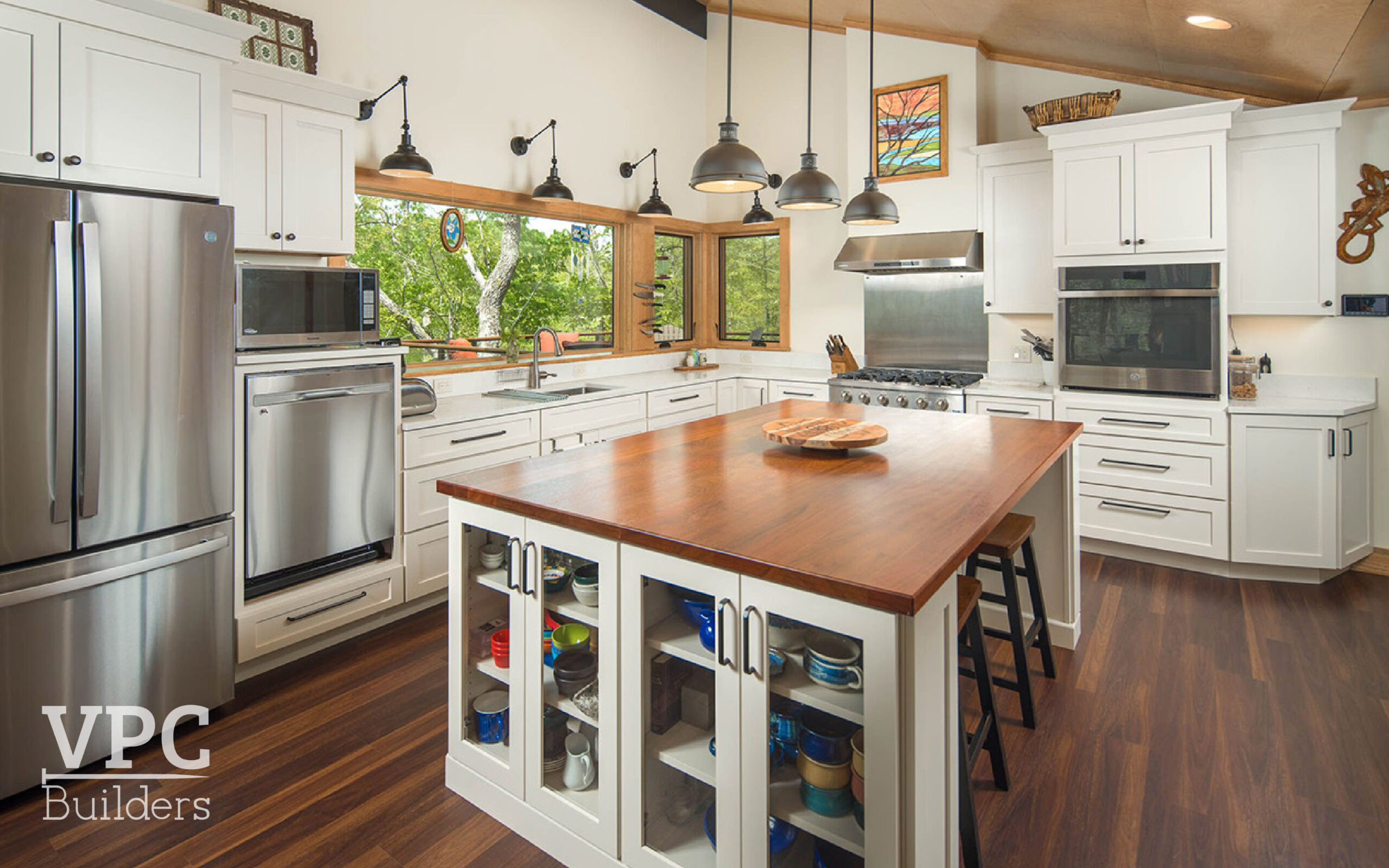
Kitchens aren’t just a place to prepare food. They are spaces where we gather and spend time together throughout the day. Homeowners are rethinking how their kitchens function, and it’s making the design decisions they make more intentional and personal to their home.
In 2026, we expect to see kitchen makeovers that focus less on dramatic statements and more on thoughtful combinations of materials and layout. The trends shaping kitchens in the next year will reflect how people are using these spaces and building them to be more flexible and long-lasting.
Here are the kitchen design trends we’re seeing take shape for 2026 and how you can integrate them into a kitchen makeover.
Ready for a kitchen makeover?
Start your kitchen design consult→
Layered Tonal Color Schemes
Single-color kitchens are giving way to layered tonal palettes. Instead of one dominant shade, designers are working within color families, using multiple tones to create more depth.
This approach allows cabinetry, walls, and islands to feel cohesive without appearing flat. Slight shifts in shade between upper and lower cabinets or between the island and perimeter cabinetry add dimension while keeping the overall look calm and unified.
Layered tones work well in both light and darker palettes, so you don’t have to rely on strong contrast to add interest.
Pattern-Splicing Tile and Backsplash Design
Tile design in 2026 favors balance. Rather than covering an entire backsplash in bold pattern, designers are blending decorative tiles with simpler ones.
Pattern splicing allows homeowners to introduce personality without overwhelming the space. Decorative tiles may frame a cooking area, define a focal point behind the range, or transition into more understated tile elsewhere.
This approach creates visual interest while maintaining a sense of restraint, which suits kitchens designed for long-term use.
Statement Stone and Mixed Surface Choices
Stone continues to play a major role in kitchen design, but the trend now favors thoughtful mixing rather than uniform surfaces.
In many kitchen makeovers, one surface becomes the focal point, often the island or a feature wall, while surrounding countertops remain more subtle. This allows expressive stone with movement or veining to shine without dominating the entire room.
Mixing stone types also supports durability and maintenance needs, pairing high-impact surfaces with practical choices in heavy-use areas.
Integrated and Panel-Ready Appliances
Appliances in 2026 are designed to blend in rather than stand out. Panel-ready refrigerators, dishwashers, and even smaller appliances allow cabinetry to take center stage.
This approach creates a quieter visual experience, especially in open-concept homes where the kitchen is always in view. Integrated appliances help the kitchen feel more like part of the home rather than a separate utility zone.
For many homeowners, this trend supports cleaner lines and a more cohesive overall design.
Bold Hardware as a Design Anchor
Hardware has taken on a more defined role in kitchen design. Rather than fading into the background, cabinet pulls and knobs are now chosen to anchor the design.
In 2026, hardware often features:
- Longer profiles
- Distinct shapes
- Finishes that add warmth or depth
Well-chosen hardware ties together cabinetry, stone, and lighting while reinforcing the overall design direction. These details may be small, but they contribute significantly to the final look.
Curved and Sculptural Kitchen Elements
Straight lines are being softened through curved and sculptural elements. Rounded islands, arched niches, and eased cabinet edges are becoming more common in kitchen makeovers.
Curves help improve circulation and make kitchens feel more welcoming. They also bring a sense of craftsmanship to spaces that might otherwise feel rigid.
This trend is most effective when used selectively, allowing one or two sculptural features to guide the design rather than reshaping the entire room.
Bespoke Storage and Flexible Kitchen Zones
Storage in 2026 is designed around lifestyle, not just capacity. Kitchens are being divided into clear zones that support different tasks.
Common features include:
- Custom pantries designed for visibility and access
- Appliance garages that keep counters clear
- Storage solutions tailored to cooking habits and family routines
Flexible zones allow kitchens to adapt as needs change, which is especially important for households that use their kitchens throughout the day.
Statement Lighting and Ceiling Details
Lighting continues to play a larger role in defining the kitchen as a destination within the home. Rather than relying on a single fixture, layered lighting is used to support both function and atmosphere.
In many kitchen makeovers, lighting works alongside ceiling details such as beams, wood accents, or subtle architectural features. These elements add warmth and help define the kitchen’s place within the larger home.
Thoughtful lighting also supports different activities, from food prep to evening gatherings.
Two-Tone Cabinetry with Subtle Variation
Two-tone cabinetry remains popular, but the approach has become more refined. Instead of sharp contrasts, designers are pairing related tones to create depth.
This might include:
- A slightly darker island paired with lighter perimeter cabinets
- Lower cabinets in a deeper shade with lighter uppers
- Secondary tones used in pantries or built-in storage
Subtle variation adds interest while keeping the palette cohesive and calm.
Designing a Kitchen Makeover That Lasts
Trends can inspire a kitchen makeover, but long-term success comes from careful planning. Layout, material quality, and daily function matter more than any single design element.
A successful kitchen makeover balances current design direction with practical needs. This includes thinking through how the space will be used, how it connects to adjacent rooms, and how materials will age over time.
At VPC Builders, kitchen design is approached with this balance in mind. Clients are guided through design decisions that support daily use and long-term value, helping create kitchens that feel relevant well beyond the current moment.
Planning a Kitchen Makeover for 2026
Kitchens in 2026 reflect intention rather than excess. The trends shaping today’s kitchen makeovers focus on depth, flexibility, and thoughtful detail.
When design choices are guided by how a kitchen supports daily life, the result is a space that feels comfortable, functional, and built to last. If you are planning a kitchen renovation or considering updates as part of a custom home, VPC Builders can help you evaluate design options and guide the process with clarity and experience. Contact us today to start a kitchen makeover consult.
FAQs: Kitchen Makeovers
Q: Do kitchen trends for 2026 work in older homes?
A: Yes. Many of these trends, such as layered colors and custom storage, adapt well to existing layouts. Thoughtful planning helps integrate new design elements without changing the character of the home.
Q: Do integrated appliances increase renovation costs?
A: They can affect the budget depending on appliance selection and cabinetry needs. Many homeowners find the visual cohesion worth the added investment.
Q: Can a kitchen makeover improve daily use without expanding the space?
A: Yes. If you are struggling to make a small kitchen work, a makeover could transform the space and make it more usable. Improved layout, storage, and lighting often have a greater impact than added square footage.