
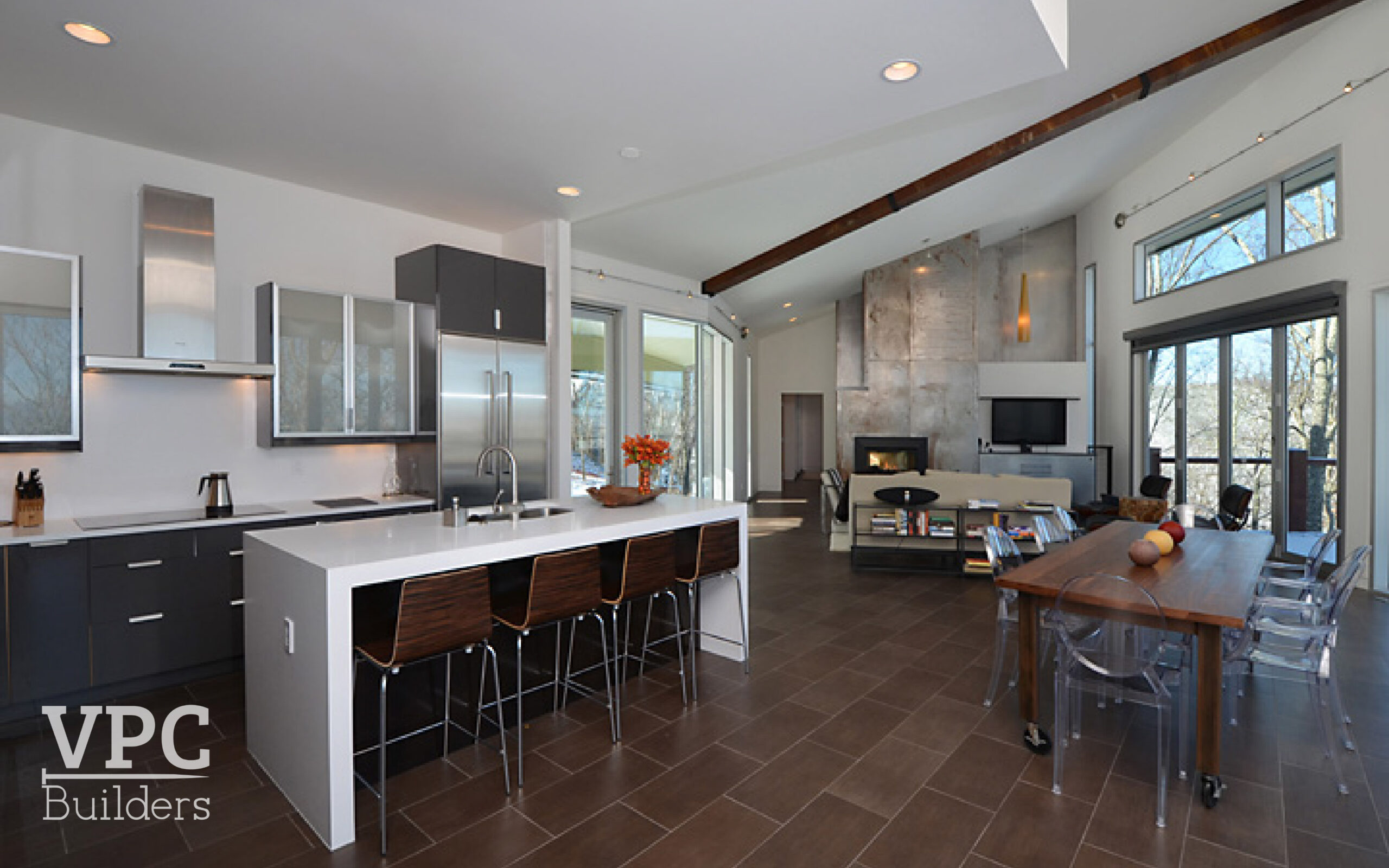
There are good reasons that interest in eco-friendly homes continues to grow. Homeowners want to create spaces that feel comfortable and also stand the test of time. Green building features can support those goals while also making the home run more efficiently, especially when the features are thoughtfully integrated early in the design process.
Adhering to sustainable building practices doesn’t mean your home will feel like a science experiment. Often, the biggest gains come from solid construction fundamentals paired with smart, eco-friendly choices. Here are some green building features we consistently see making a real difference in custom homes in the High Country.
Want to bring more green features to your current or next home?
Request a sustainable home assessment→
Passive Design Choices
Green building starts with design decisions, not the mechanical equipment. A floor plan that supports natural airflow and balanced heating and cooling can reduce energy demand even before any technology is added.
For example, how you orient your home on the lot will determine how well you can take advantage of the natural sunlight. Or you might want to design a room so that larger windows can take advantage of solar heat or more natural light. You might also use roof overhangs and shading elements to reduce summer heat gain, minimizing your reliance on air conditioning systems.
High-Performance Building Envelope
The building envelope is the structure surrounding the interior of your home and separates it from the outdoors. The building envelope includes the walls, roof, foundation, insulation, and air sealing.
The building envelope plays a major role in energy performance and indoor comfort. A well-built envelope will:
- Reduce air leaks and drafts
- Help maintain consistent indoor temperatures
- Protect against moisture issues
High-quality insulation combined with proper air sealing keeps conditioned air where it belongs. This allows heating and cooling systems to work more efficiently and improves comfort in every season.
Energy-Efficient Windows and Doors
Windows and doors are major pathways for heat gain and heat loss. Choosing well-built, energy-efficient products makes a noticeable difference.
Features to look for include:
- Double-or triple-pane glass
- Low-emissivity (low-E) coatings
- Well-insulated frames and tight seals
Beyond efficiency, window placement matters. Thoughtful positioning supports natural light and can reduce reliance on artificial lighting throughout the day.
Advanced HVAC and Climate Control Systems
Even the best building envelope needs a reliable heating and cooling system. Modern high-efficiency heat pumps, zoned systems, and smart thermostats provide steady comfort while using less energy.
The right sizing is as important as the equipment itself. Systems that are too large or too small struggle to maintain balanced temperatures and may wear out sooner. Make sure your system matches your home’s size, layout, and insulation levels.
Sustainable Materials
Material selection influences both environmental impact and long-term maintenance. Common green material considerations include:
- Responsibly sourced or engineered lumbar
- Products with recycled content
- Low-VOC paints, adhesives, and finishes
Durable materials reduce the need for replacement and repairs over time, which conserves resources and lowers long-term ownership costs.
Water-Saving Features
Reducing water use is another key part of eco-friendly home design. Helpful features might include:
- Low-flow faucets and showerheads
- High-efficiency toilets
- Modern water heaters
Some homeowners also explore rainwater collection or graywater-ready systems, depending on local regulations and their personal goals.
Renewable Energy Options
Solar-ready design keeps future energy choices open, even if panels are not installed right away.
Planning early may include:
- Roof orientations that support solar placement
- Space for future inverters or battery storage
- An electrical infrastructure that allows expansion
This approach provides flexibility without committing to immediate installation.
Indoor Air Quality Features
A green home should feel healthy as well as efficient.
Indoor air quality improvements may include:
- Fresh air ventilation systems
- High-quality air filtration
- Sealed combustion appliances
These features help limit indoor pollutants and maintain steady airflow throughout the home.
Why Green Building Works Best When Planned Early
You can choose to integrate green features in your home at any time. However, green features are often most effective when they are considered during the design phase. Early planning allows systems, materials, and layout choices to work together. It results in better coordination between the trades and fewer construction changes during the build phase. It’s also helpful for budget planning.
At VPC Builders, clients are guided through green building options based on their budget and long-term goals. Not every home needs every feature, but all homes can benefit from selecting green features that offer meaningful value.
Building an Eco-Friendly Home That Fits Your Life
Eco-friendly homes are built through thoughtful decisions made at each stage of the process. When green building features are selected with care and aligned with how you live, the result is a home that feels comfortable, performs well, and supports long-term sustainability.
If you’re exploring options for a custom home, VPC Builders can help you identify green features that make sense for your goals and guide you through the process from start to finish. Contact us today for a sustainable home assessment on your custom build property.
FAQs on Green Building Features
Q: Do eco-friendly homes cost more to build?
A: Some green features carry a higher upfront cost, while others are comparable to standard options. Many homeowners find that energy savings, durability, and lower maintenance costs help balance the initial investment over time.
Q: Can I choose a few green features instead of going fully “green”?
A: Yes. Green building is not an all-or-nothing approach. Many homeowners select a handful of features that align with their goals and budget.
Q: Does green building affect the look of my home?
A: Not at all. Eco-friendly homes can reflect any architectural style. Sustainable features focus on performance, while design aesthetics remain fully customizable.